The Steady Strollers: Building Group Walks Around Dogs Who Need a Gentler Pace
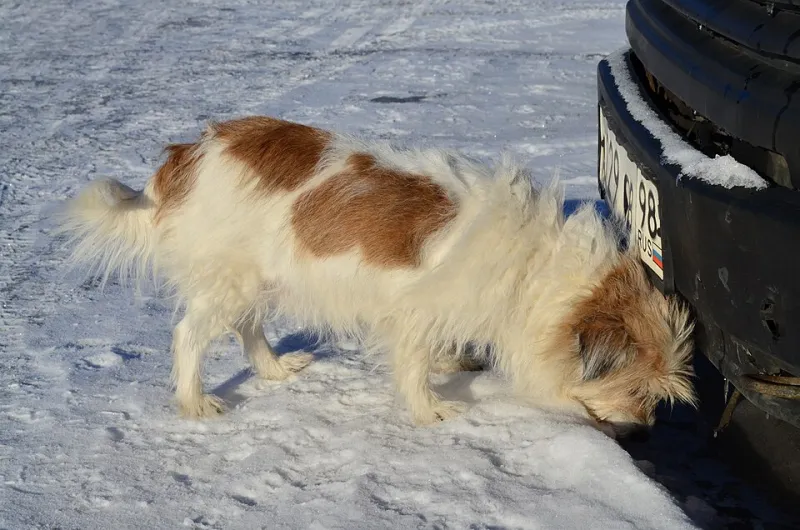
Photo: Горбунова М.С., CC BY-SA 4.0, via Wikimedia Commons
A good group walk is a bit like a decent Sunday lunch: everyone needs to leave the table feeling fed, not hurried. But when your pack includes a dog who’s older, recovering from an injury or managing a long-term condition, the usual pace can start to look less like a sociable stroll and more like a race the poor thing never signed up for.
That doesn’t mean splitting the pack permanently or writing off group walks altogether. It means designing the walk around the dog who needs a gentler pace, rather than asking them to keep up with everyone else. Think of it as the slow lane — not a lesser lane.
Start with a proper owner conversation
Before a slower dog joins a regular walk, ask the questions that actually matter. “How far is comfortable today?” is more useful than “Can they manage a walk?” Nobody knows the answer to the second one on a bad morning.
Useful things to pin down:
- Usual distance and duration — and whether that’s a good day or a cautious estimate.
- Surface preferences — some dogs are fine on grass but struggle on cambered pavements; others are the reverse.
- Warm-up time — does the dog need five minutes of sniffing before moving properly?
- Medication or energy dips — is there a time of day when they’re brighter?
- Signs to stop — what does “enough” look like for this dog? A sit, a lag, a change in tail carriage, a reluctance to turn a corner.
- Vet or physio guidance — if there’s a recovery plan, follow it, not the pack’s routine.
A quick WhatsApp voice note from the owner can be worth more than a long form. Keep it practical and store it where you’ll actually see it before the walk.
Choose the route for the slowest pair of paws
In a mixed pack, the route should be set by the dog with the shortest comfortable range. That might mean a loop of 20 minutes rather than 45, or a there-and-back along a flat stretch of park path instead of a circuit with two steep bits.
UK specifics matter here. Cold pavements in winter can be uncomfortable for older joints, and gritting salt can sting paws. Wet grass is slippery, muddy and tiring; a dog recovering from a strain doesn’t need to be doing a low-level obstacle course every morning. If it’s been freezing overnight, check the pavement with the back of your hand before heading out — if it’s too cold for you, it’s too cold for a dog who’s already stiff.
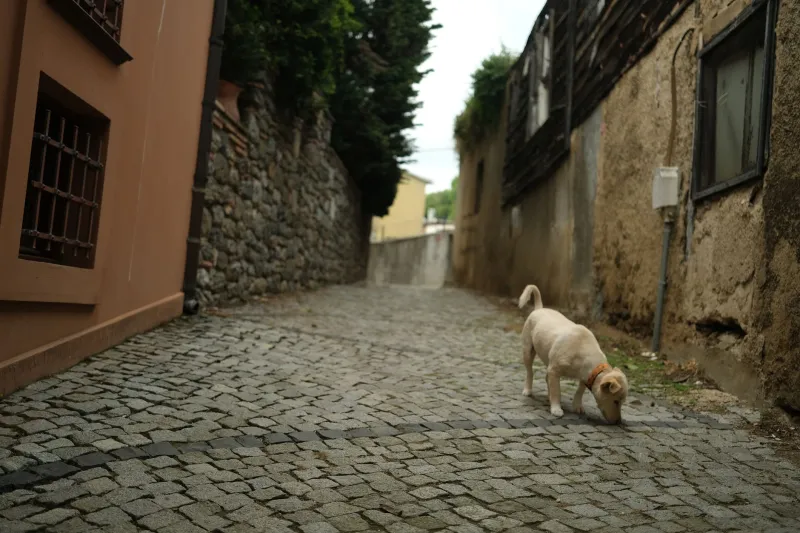
Shorter doesn’t have to mean duller. Pick a route with plenty of sniffing opportunities: tree bases, low walls, the corner where the local fox has clearly been holding meetings. A 15-minute sniff walk can be more enriching than a 40-minute march.
Let the sniff stops be the main event
For slower dogs, stopping isn’t failure. It’s the point. Sniffing lowers arousal, gives the brain something to do and lets the body rest without the pressure of “we’re supposed to be moving”. Build in frequent pauses and don’t rush them along.
If the faster dogs in the pack get restless, give them a job: a sit-and-watch, a scatter of treats in the grass, or a bit of loose-lead practice while the slower dog has a good old sniff. This keeps the group together without making the slower dog feel like the reason everyone’s waiting.
One useful trick is to walk in a loose formation rather than a tight crocodile. The quicker dogs can orbit a little, provided they’re not barging past or dragging the slower dog along. If the pack can’t manage that, walk in two groups and meet at a midpoint. There’s no prize for forcing everyone into a single line.
Watch for the signs that gentler is kinder
A dog who’s coping will usually show it: relaxed ears, a loose tail, an interest in sniffing, a willingness to move forward after a pause. A dog who’s struggling might lag behind, stop suddenly, shift weight off a leg, pant in cold weather, or look back towards home. Some dogs get grumpy when they’re sore — a warning lip-lick or a head turn is worth listening to.
If you see those signs, end the walk on a good note rather than pushing to finish the route. A shorter walk that ends calmly is better than a full loop that ends in stiffness or a snap at a younger dog.
Keep the pack inclusive, not identical
A happy pack doesn’t mean every dog does the same thing at the same speed. It means everyone has a role and a comfortable place in the outing. The senior dog might set the pace; the youngster might get a few extra sniff-and-settle games; the middle-aged terrier might just enjoy being out with the gang.
So next time you plan a group walk, ask yourself who the route is really for. If the answer is “the fastest dog”, it might be time to build in a slow lane. Your older, recovering or chronically managed pack members will thank you — probably by taking a very long, very satisfied sniff at the first tree.