The Kerbside Huddle: Reading a Dog Pack Before the Leads Clip On
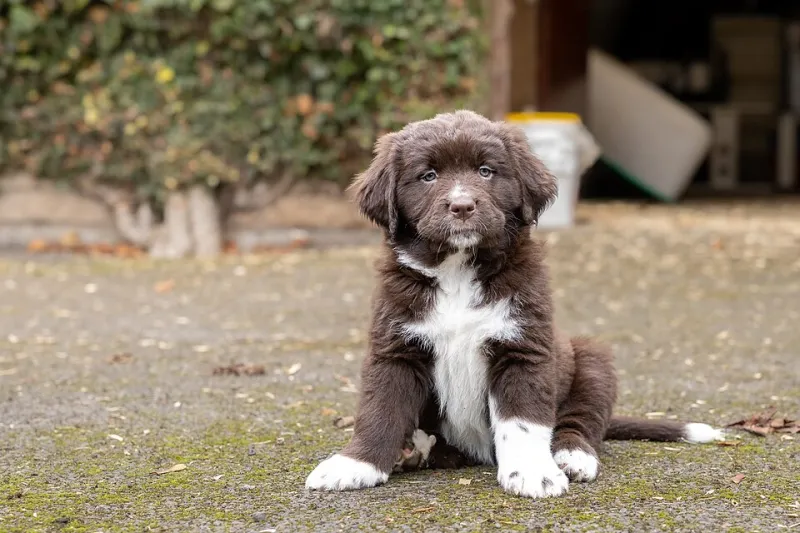
Photo: Sharon Byrne Photography, CC BY-SA 4.0, via Wikimedia Commons
Group dog walks can look effortless from the other side of the park: a neat line of tails, a cheerful jangle of leads, everyone moving in the same direction. In reality, the walk usually tells you what the meet-and-greet already knew. Before the first clip goes on, there is a short window when the pack shows its hand — who is wired, who is worried, who wants to be everyone’s best friend and who would rather have a metre of pavement to themselves.
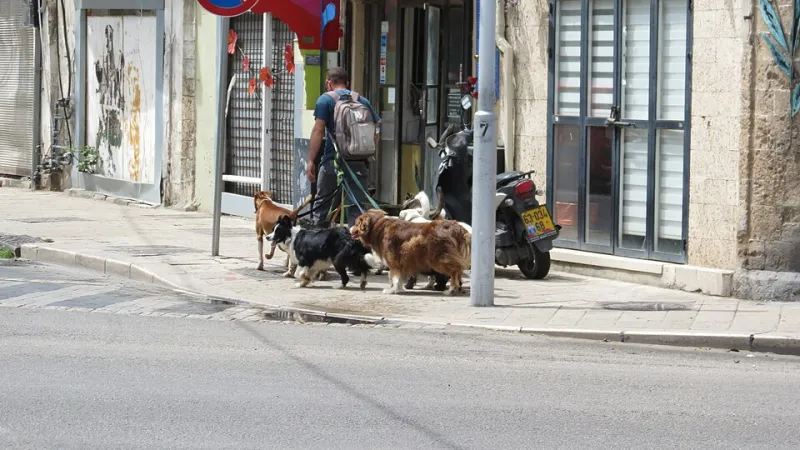
At Pack Buddies, we call this the kerbside huddle. It is not a formal assessment or a training session. It is a brief pause — often five minutes or less — where owners and walkers look before they leap. Done consistently, it prevents the sort of wobbly outing that starts with tangled leads and ends with a dog who has had quite enough, thank you.
Start with the bodies, not the barking
Noise gets attention, but posture tells the more useful story. As the dogs gather, scan each one from nose to tail. A relaxed dog tends to have a soft, curving body, loose ears and a tail that moves easily rather than clamped or held rigid. A worried dog may freeze, shift weight backwards, lick their lips repeatedly, yawn out of context or show the whites of their eyes. An overexcited dog might be bouncing, panting before any real exercise, or fixing hard on another dog and refusing to look away.
None of these signals is a diagnosis. They are information. The point is not to label a dog as good or bad, but to ask a simple question: is this group, in this place, on this morning, set up for a pleasant walk?
Match the pace to the pack
Energy is contagious. Two dogs who are both revving can wind each other up within seconds; a steady dog paired with a frantic one may spend the whole walk managing the pace. Watch how each dog arrives. Is one pulling towards the gate while another hangs back? Is someone pacing in small circles, or standing quietly with a loose lead? A quick energy audit helps you decide who should walk beside whom — or whether the group needs a little more space before setting off.
This is especially useful on damp November mornings when everyone is keen to get moving. The temptation is to clip on and go. But a thirty-second pause to let the bounciest dog settle, or to start the calm dog ahead, can change the tone of the entire hour.
Watch the social grammar
Healthy dog greetings are usually brief. A quick sniff, a turn away, perhaps a shake-off, and then everyone gets on with the business of sniffing lamp posts. Trouble tends to show up when greetings become sticky: one dog blocking another’s movement, a hard stare that will not break, a puppy being repeatedly pinned or a dog guarding the doorway like a bouncer.
You do not need to intervene dramatically. Often, widening the spacing is enough. Put a little distance between dogs as leads go on. Let one pair exit first. Use a parked car or a garden gate as a natural buffer. If two dogs are repeatedly drawn to each other in a way that looks tense rather than playful, pair them with different partners for this walk.
The five-minute pulse check, step by step
- Arrival scan. Before leads come out, take sixty seconds to look at the whole group. Who is loose? Who is stiff? Who is trying to hide behind their owner’s legs?
- Body check. Look for tension in the face, jaw, ears and tail. Notice any dog who is panting without exercise or licking their lips repeatedly.
- Energy audit. Sort the group loosely into settled, lively and overstimulated. You are not judging character; you are planning the walk.
- Pairing plan. Match calm with calm where possible. Avoid putting two excitement magnets together just because they are the same size or breed.
- Route and exit. Decide who goes out first. Choose a quieter start — a side street, a wide pavement, a park path rather than a busy high street — if the group needs to find its rhythm.
Small tweaks, calmer walks
The most useful adjustments are rarely dramatic. Staggered exits give dogs room to settle without crowding a doorway. A slightly longer lead on a tense dog can reduce pressure without losing control. Splitting a larger pack into two smaller groups is not a failure; it is often the kindest option for dogs who find big social scenes a bit much.
It also helps to remember that a dog’s capacity changes. A dog who is fine in a group on a cool morning may struggle on a warm afternoon, after a vet visit, or during the noisy run-up to fireworks season. The kerbside huddle is a chance to notice that today is not yesterday.
When to pause the plan
If a dog is limping, coughing, visibly painful or simply not themselves, the walk can wait. That is vet territory, not pack-management territory. If two dogs are frozen in a hard stare, if one is trying to climb into a hedge to escape another, or if the group is getting tighter and tighter rather than looser, stop. Add space, change the pairing or split the pack. There is no prize for pushing through a tense walk.
The payoff is not a perfect line of dogs. It is a group that can relax, sniff, trot and mooch without someone spending the whole walk on edge. A five-minute pause at the kerb is a small investment in the sort of happy, healthy pack that makes walks a pleasure for dogs and humans alike.