Before the Lead Comes Out: The Front-Door Brief That Makes Every Walk Safer
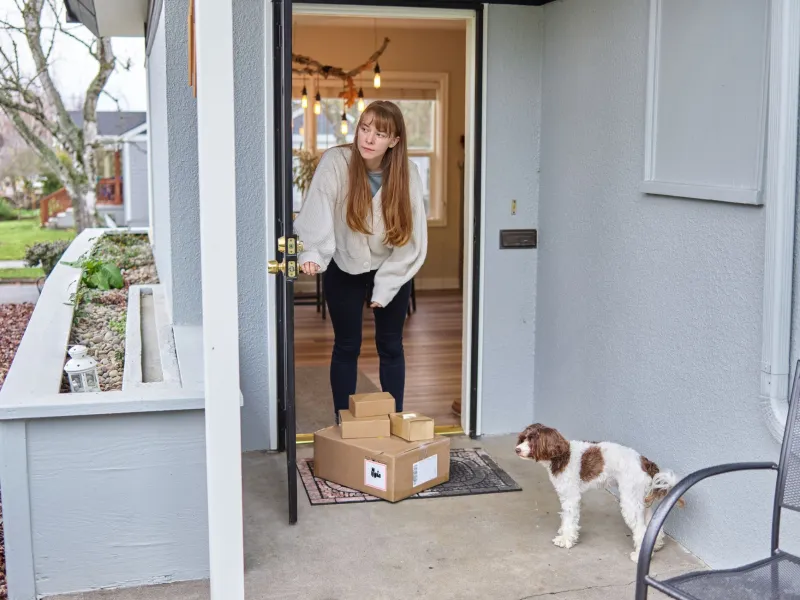
Most dog walks are won or lost at the front door. Not the route, not the park, not the weather. The first five minutes — the bit where lead, harness, keys, treats and a slightly overexcited dog all converge in a narrow hallway — set the tone for everything that follows. At Pack Buddies, we treat the handover as part of the walk, not a paperwork formality. It is how a walker learns the difference between a dog who is excited and a dog who is already over threshold.
A good handover is not a long interrogation. It is a short, honest brief: what matters today, what to avoid, what to do if something goes sideways. It builds trust through preparation rather than a post-walk message that says 'sorry, he was a bit reactive'. Below is the front-door conversation we think every owner and walker should have before the first clip of the lead.
Why the first five minutes do the heavy lifting
Dogs are brilliant at reading our routines. They know the sound of the lead, the jangle of keys, the click of the front door. That is why the handover should be calm and predictable. If the hallway is chaotic, the dog is already halfway up the emotional scale before you have left the doorstep. A short brief gives the walker a chance to slow things down, use the dog's name, offer a treat, and let the dog choose to approach rather than be clipped and dragged.
It also gives you a chance to say the things that are easy to forget: the harness clip that sometimes twists, the fact that your dog will bolt for the postie, the medication that was given at 7.30am, or the sore paw that should not be walked too far. None of that is fussy. It is the difference between a safe walk and a lucky one.
The front-door checklist: six things to say out loud
You do not need a clipboard. You do need to cover the basics, preferably before the dog is bouncing at the door.
- Today's routine. Has breakfast happened? Has medication been given? Is this the first walk of the day or a top-up? A dog with a full bladder and an empty stomach behaves differently from one who has already had a good run.
- The kit quirks. Which lead, which harness, which collar, which clip. If the harness goes on over the head, say so. If the lead should be clipped to the back ring and not the front, say so. If your dog backs away from a particular piece of kit, mention it.
- Triggers and distance. Other dogs, cyclists, prams, scooters, horses, livestock, the bin lorry, the school run. Tell the walker what your dog notices first and how far away they need to be to stay comfortable.
- Recall and rewards. Does your dog come back for a squeaky toy, a piece of cheese, or a particular word? Is recall reliable in an enclosed field but not near a road? Be specific. 'Good recall' means different things to different people.
- Health quirks. Arthritis, epilepsy, allergies, sensitive paws, a recent vaccination, a dodgy tummy, a vet appointment later that day. Any medication, any restrictions, any early signs that mean turn for home.
- Contacts and consent. Your vet's number, your number, a second contact, and what you want the walker to do if they cannot reach you. Do they have permission to seek vet care? Is there a spending limit you want them to know about? Agree it before the walk, not during an emergency.
Triggers, thresholds and the give-space rule
A walker does not need to know your dog's entire life story, but they do need to know what 'too close' looks like. Does your dog freeze, lip-lick, stare, bark, lunge, or try to hide behind a leg? Does a tight lead make things worse? Should the walker cross the road, turn around, or ask another owner to give space?
The give-space rule is simple: if in doubt, create distance. That might mean walking on the other side of the street, waiting behind a parked car, or taking a different path through the park. It is not a failure of training. It is good walking.
Lead etiquette and local hazards
UK pavements are not built for every combination of dog, lead, buggy and delivery bike. A few small agreements make a big difference: keep the lead short near roads, do not let it stretch across the pavement, close gates behind you, and pick up after the dog even when nobody is watching. If your dog is nervous, a yellow lead or harness can help signal that you need a bit of space, but it is not a guarantee. The walker should still advocate for the dog.
Local hazards matter too. Broken glass, discarded takeaways, rat bait, conkers, acorns, blue-green algae in ponds, and seasonal fireworks can all change a route. In autumn and winter, dark mornings and wet leaves make roads slicker and visibility poorer. A reflective lead or harness and a small torch are not overkill; they are basic kit.
What the walker should ask you back
A handover is a two-way conversation. A good walker will ask how your dog tells you they need the loo, what they do when they are overwhelmed, which vet you use, and whether there are any areas or dogs to avoid. They should also ask what you want them to do if your dog has a minor scare or a small scrape. Do you want a message straight away, or only if it needs attention? Agree the threshold before it happens.
The first-week review
After three or four walks, have a short check-in. Did the route work? Was the handover too rushed? Did the dog settle? Is there anything the walker noticed that you should know about? This is not a complaint session; it is a tune-up. Dogs change with the seasons, their health, and their confidence. The five-minute handover is not a one-off. It is a habit — and a very good one to build before the first lead clip.